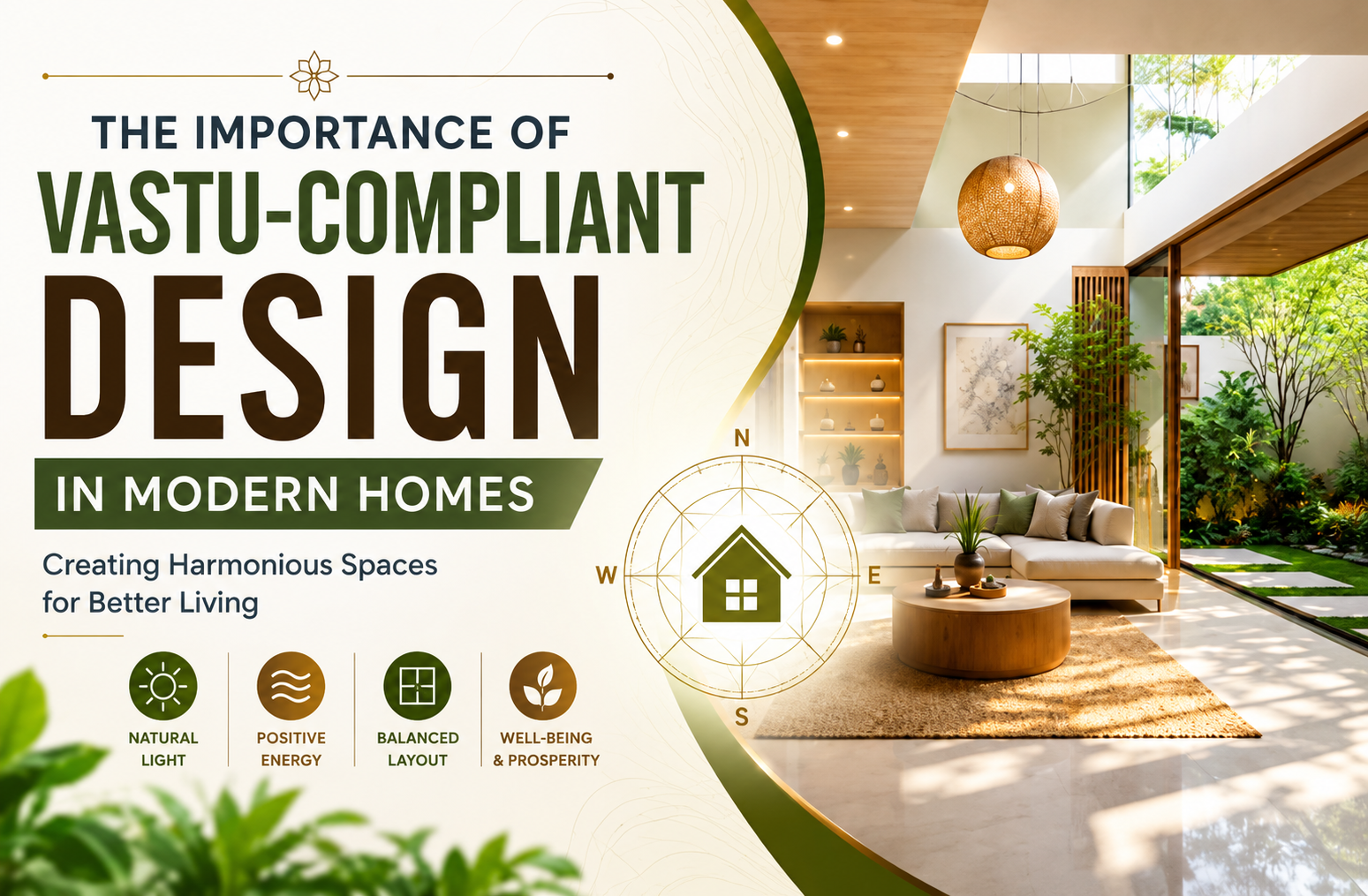
In today's fast-paced lifestyle, homeowners are looking beyond aesthetics and functionality toward homes that create balance, positivity, and well-being.
In today's fast-paced lifestyle, homeowners are looking beyond aesthetics and functionality. Many people now prefer homes that create a sense of balance, positivity, and well-being. This is where Vastu-compliant design continues to play an important role in modern architecture.
At Satya Architects, thoughtful planning often includes understanding how traditional design principles can coexist with contemporary architecture. Rather than treating Vastu as a rigid rulebook, modern architects use it as a guiding framework to improve spatial harmony and natural flow within a home.
What is Vastu-Compliant Design?
Vastu Shastra is an ancient Indian architectural science that focuses on the relationship between built spaces and natural elements such as sunlight, airflow, direction, and energy balance. A Vastu-compliant design aims to create environments that feel comfortable, organized, and naturally connected to their surroundings.
Today, many homeowners choose to incorporate Vastu principles during the planning stage because it helps improve functionality while also aligning with cultural and emotional preferences.
Why Vastu Still Matters in Contemporary Architecture
Modern architecture emphasizes open layouts, sustainable materials, and efficient use of space. Interestingly, several Vastu principles naturally support these goals.
For example:
- Proper orientation of rooms can improve natural lighting and ventilation.
- Balanced spatial planning can enhance comfort and movement within the home.
- Placement of windows and open areas often encourages better airflow and energy efficiency.
These factors are not only connected to traditional beliefs but also contribute to practical and environmentally responsive design.
The Role of Architects in Vastu Planning
A professional architect's role is to balance client preferences, site conditions, structural feasibility, and design aesthetics. In many cases, architects integrate Vastu principles without compromising modern design sensibilities.
Instead of forcing layouts, experienced firms focus on creating practical solutions that respect both contemporary lifestyles and traditional considerations. This balanced approach helps homeowners achieve spaces that are visually appealing, functional, and personally meaningful.
Final Thoughts
Vastu-compliant design is no longer limited to traditional homes. Today, it is thoughtfully integrated into modern residences, villas, apartments, and commercial spaces. When approached with flexibility and architectural expertise, Vastu can complement modern design rather than restrict it.
As architectural trends continue to evolve, the focus remains the same, creating spaces that support comfort, positivity, and better living experiences.
Looking for the best Vastu architects in Delhi NCR? Contact Satya Architects today.