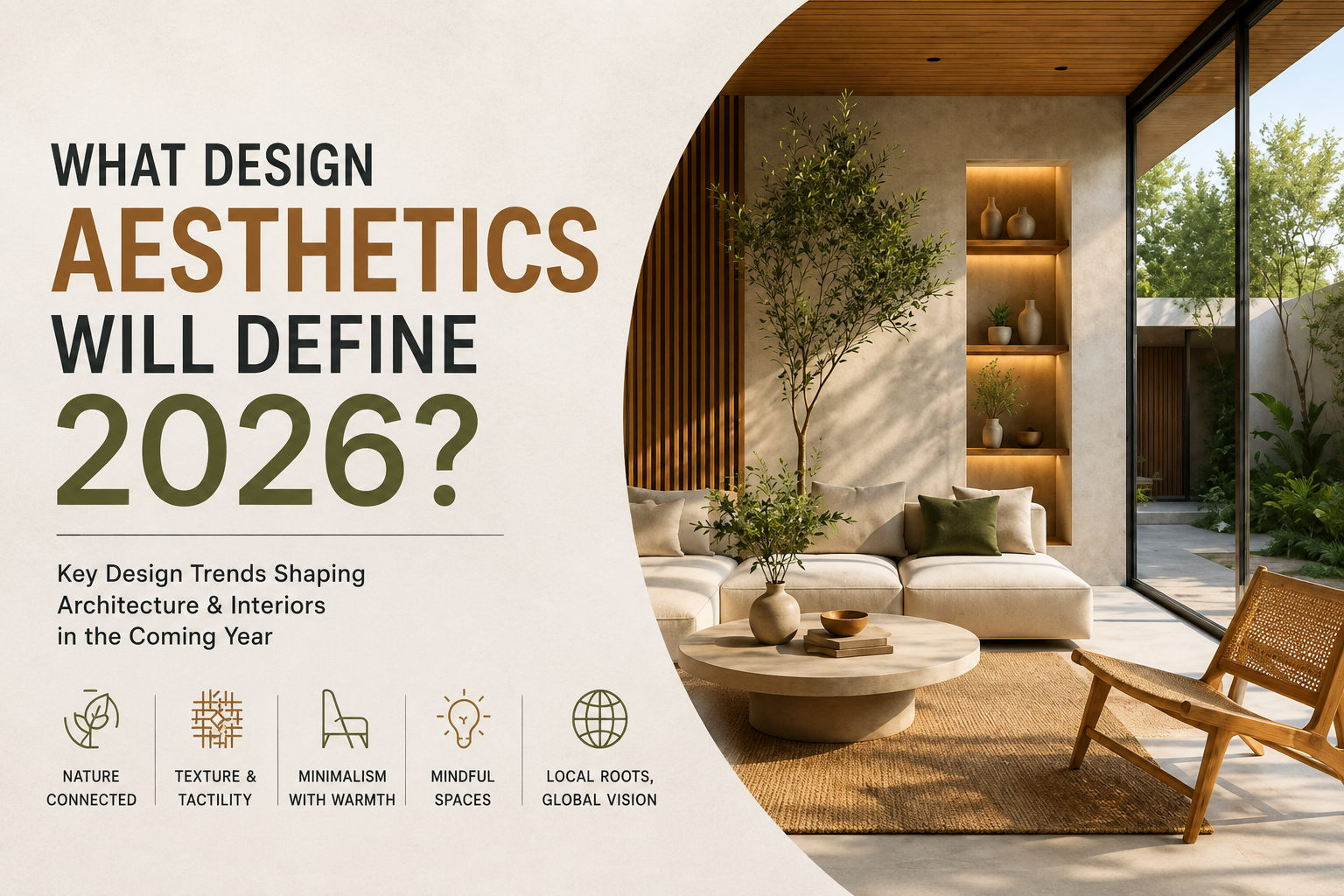
Architecture and interior design are entering a new phase where aesthetics are shaped by sustainability, emotional wellbeing, cultural identity, adaptability, and sensory experience.
Architecture and interior design are entering a new phase where aesthetics is no longer driven only by visual appeal. In 2026, design trends are expected to reflect deeper priorities such as sustainability, emotional wellbeing, cultural identity, adaptability, and sensory experience. Clients today are increasingly looking for spaces that feel personal, functional, and timeless rather than purely decorative.
At Satya Architects, we have observed a clear shift in how homeowners, developers, and commercial brands approach design decisions. The demand is moving away from fast-moving trends and toward meaningful environments that balance beauty with purpose. The aesthetics that will define 2026 are rooted in authenticity, longevity, and intelligent spatial planning.
This article explores the key architectural and interior design aesthetics expected to influence residential, commercial, and urban spaces in 2026.
1. Warm Minimalism Will Replace Cold Minimalism
For years, minimalism dominated modern architecture with stark white palettes, sharp lines, and highly simplified interiors. However, 2026 will redefine minimalism through warmth, texture, and comfort.
Instead of spaces feeling sterile or overly polished, warm minimalism introduces natural materials, earthy tones, layered lighting, and tactile finishes. Interiors will continue to embrace simplicity, but with a softer and more inviting atmosphere.
Key Characteristics of Warm Minimalism
- Neutral and earthy color palettes
- Natural wood and textured stone finishes
- Soft indirect lighting
- Clean layouts with functional decor
- Handmade and artisanal elements
- Comfortable furniture with organic curves
This design aesthetic works particularly well for urban homes, boutique hospitality projects, and modern offices where calmness and emotional comfort are becoming essential.
2. Biophilic Design Will Become a Standard, not a Trend
Biophilic design has evolved significantly over the past few years, and by 2026 it is expected to become a foundational principle in architecture rather than an optional feature.
The integration of natural elements into built environments improves mental wellbeing, productivity, air quality, and user experience. Modern clients increasingly understand the long-term value of healthier spaces.
How Biophilic Aesthetics Will Shape 2026
- Indoor courtyards and green pockets
- Large openings for natural ventilation
- Vertical gardens and integrated landscaping
- Water-inspired textures and calming materials
- Daylight-focused planning
- Seamless indoor-outdoor transitions
Architectural planning in 2026 will prioritize natural airflow, climate responsiveness, and sensory comfort. Sustainable landscapes and nature-connected interiors will strongly influence both luxury and mid-scale developments.
3. Sustainable Luxury Will Define Premium Spaces
Luxury architecture is changing. Clients are becoming more conscious about environmental impact, resource consumption, and long-term sustainability. In 2026, true luxury will not be measured by excess, but by thoughtful craftsmanship, energy efficiency, and timeless materials.
Sustainable luxury focuses on high-quality materials, low environmental impact, and durable design choices that age gracefully.
Materials Expected to Dominate in 2026
- Reclaimed wood
- Lime plaster and natural stone
- Bamboo-based materials
- Recycled metal finishes
- Low-carbon concrete alternatives
- Locally sourced textures and finishes
Rather than visually overwhelming spaces, premium design aesthetics will emphasize restraint, elegance, and authenticity.
At Satya Architects, sustainability is integrated into design thinking from the earliest planning stages. We believe future-ready architecture must combine environmental responsibility with enduring visual appeal.
4. Curved and Organic Forms Will Continue to Rise
The rigid geometric forms that defined earlier modern architecture are gradually giving way to softer and more fluid spatial expressions.
Organic architecture inspired by nature will continue to influence facades, furniture, staircases, ceilings, and interior layouts in 2026. Curves create movement, softness, and a stronger emotional connection with spaces.
Popular Organic Design Elements
- Arched doorways and windows
- Sculptural furniture forms
- Curved walls and partitions
- Rounded kitchen islands and counters
- Flowing spatial layouts
- Fluid facade compositions
These design choices not only improve visual harmony but also create more comfortable user experiences within residential and hospitality projects.
5. Multi-Functional Spaces Will Shape Modern Living
Modern lifestyles continue to evolve, especially in urban environments where flexibility is becoming increasingly important. The concept of static rooms with fixed purposes is slowly disappearing.
In 2026, architecture will focus heavily on adaptable and multi-functional spaces.
Emerging Spatial Planning Priorities
- Home offices integrated into living areas
- Flexible partitions and movable walls
- Convertible furniture systems
- Smart storage integration
- Hybrid indoor-outdoor entertainment zones
- Multi-purpose community spaces
Design aesthetics will support flexibility without compromising elegance. This trend is particularly important in compact urban housing and mixed-use developments.
6. Textured Surfaces Will Replace Flat Finishes
Smooth, uniform finishes are gradually losing popularity as designers move toward more tactile and layered environments.
In 2026, texture will play a critical role in architectural identity and interior styling. Spaces will increasingly use surfaces that engage touch and visual depth.
Trending Texture Applications
- Fluted wall panels
- Exposed concrete with natural imperfections
- Handmade tiles
- Raw stone finishes
- Textured fabrics and upholstery
- Limewash and microcement walls
These details add warmth, individuality, and material richness while helping spaces feel more grounded and authentic.
7. Smart Technology Will Become Invisible
Technology is no longer just about automation. In 2026, the focus will shift toward invisible integration.
The best-designed smart spaces will hide technology within architecture instead of making it visually dominant.
Smart Design Trends for 2026
- Concealed lighting systems
- Voice-controlled environmental settings
- Integrated energy monitoring
- Sensor-based climate control
- Hidden charging and connectivity solutions
- Automated shading and daylight optimization
Future aesthetics will favor clean visual continuity where technology supports lifestyle without interrupting the overall design language.
8. Cultural Identity and Local Craftsmanship Will Return
One of the most significant design shifts expected in 2026 is the renewed appreciation for regional identity and cultural storytelling.
Globalized architecture often led to spaces that looked visually similar regardless of location. Today, clients are seeking designs that feel rooted in local context and heritage.
How Cultural Aesthetics Will Influence Architecture
- Use of regional materials
- Incorporation of traditional craftsmanship
- Climate-responsive architectural planning
- Contemporary reinterpretation of heritage details
- Locally inspired color palettes and textures
This movement toward contextual design helps create architecture that feels timeless rather than trend-driven.
At Satya Architects, we believe meaningful architecture should reflect both modern aspirations and local character.
9. Earth-Toned Color Palettes Will Dominate Interiors
Color trends in 2026 are expected to move further toward earthy, muted, and emotionally calming tones. Bright, highly saturated interiors are gradually being replaced by palettes inspired by natural landscapes.
Expected Popular Colors in 2026
- Terracotta
- Sand beige
- Olive green
- Clay brown
- Warm greys
- Deep charcoal accents
- Muted rust tones
These colors create grounding environments and complement sustainable materials exceptionally well.
10. Emotional Design Will Influence Every Space
Perhaps the most important aesthetic trend of 2026 is emotional design. People no longer want spaces that only look impressive in photographs. They want environments that improve daily life, reduce stress, support productivity, and create meaningful experiences.
Architectural aesthetics will increasingly focus on:
- Sensory comfort
- Acoustic wellbeing
- Natural lighting quality
- Spatial openness
- Privacy balance
- Emotional warmth
The future of architecture is not simply visual. It is experiential.
Why These Design Trends Matter for Future Architecture
The aesthetics defining 2026 are not temporary design trends. They reflect larger cultural and environmental shifts that are reshaping how people live, work, and interact with spaces.
Clients today value:
- Sustainable architecture
- Flexible layouts
- Authentic materials
- Wellness-focused planning
- Long-lasting design quality
- Human-centered experiences
Architects and designers who understand these evolving expectations will be better positioned to create spaces that remain relevant for years to come.
Satya Architects Perspective on the Future of Design
At Satya Architects, our approach combines modern architectural thinking with practical functionality, sustainability, and timeless aesthetics. We believe the future of design lies in creating spaces that are adaptable, environmentally responsible, emotionally engaging, and deeply connected to human experience.
As 2026 approaches, architecture will continue to evolve beyond visual trends. The most successful spaces will be those that balance innovation with authenticity and aesthetics with purpose.
Whether designing homes, commercial spaces, hospitality projects, or urban developments, the goal remains the same: to create architecture that improves how people live.
Final Thoughts
The design aesthetics defining 2026 will focus on warmth, sustainability, flexibility, and emotional connection. From biophilic planning and organic forms to textured materials and intelligent spatial design, architecture is moving toward a more human-centered future.
Rather than following short-lived trends, the industry is embracing timeless principles that support wellbeing, environmental responsibility, and meaningful living experiences.
For clients and developers planning future projects, understanding this emerging aesthetics can help create spaces that remain modern, functional, and relevant for years ahead.
As architectural priorities continue to evolve, Satya Architects remains committed to delivering thoughtful and future-ready design solutions grounded in creativity, expertise, and long-term value.